
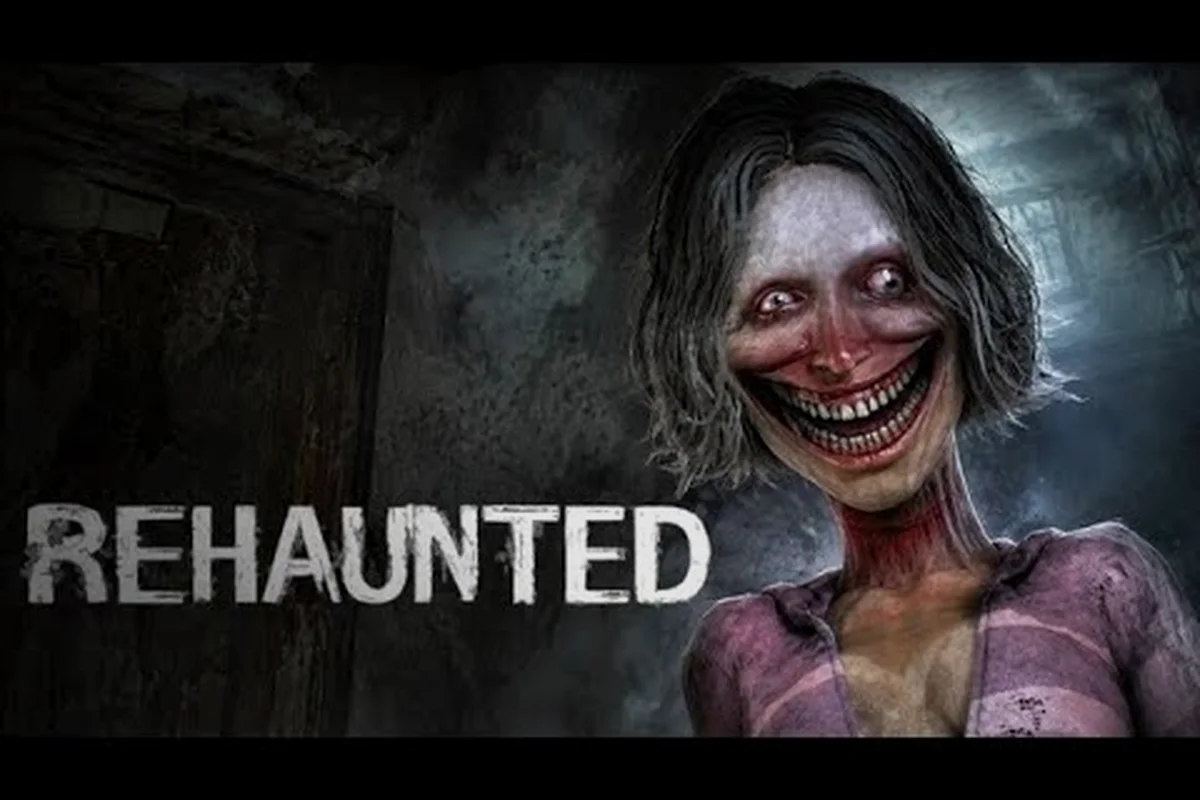
The Rehaunted final chapter is where every photograph, audio log, and UV scan you have collected across the house finally has to mean something. According to the Cauchemar publishing profile, the game is a first-person psychological detective horror experience where detective Connor Raines investigates a single death inside one house using a UV flashlight, magnifier, camera, walkie-talkie, and evidence board. Reaching the last segment is not about rushing — it is about connecting the last evidence chains before the house closes in on you, which is exactly what this Rehaunted last chapter guide is built to help you do.
Understanding How the Rehaunted Final Chapter Triggers
The Rehaunted final chapter does not start on a timer, and it does not unlock after a fixed number of rooms. It triggers when Connor has gathered enough evidence to make the house's narrative "click" into place. Treat the house as an evidence-gated route rather than a linear hallway: each new tool you pick up opens a new category of clues, and each category feeds the central evidence board that ultimately decides the ending.
Evidence Threshold Before the Final Segment
Community testing suggests the Rehaunted final chapter begins once the evidence board reaches a high-density state — typically when most clue clusters are linked and only the attic or basement clusters remain unresolved. The walkie-talkie chirps more frequently as you approach this threshold because it is responding to how many unread signals your board is carrying.
| Tool | Primary Use in the Final Chapter | Evidence Type It Produces |
|---|---|---|
| UV flashlight | Reveals hidden writing on walls and blood trails on the floor | Trace evidence (Tier 1) |
| Camera | Documents staged scenes and captures anomalies | Photographic evidence (Tier 2) |
| Magnifier | Reads faint marks, fingerprints, torn pages | Forensic evidence (Tier 3) |
| Walkie-talkie | Receives character transmissions and environmental cues | Audio evidence (Tier 4) |
| Evidence board | Connects all four tiers into the case conclusion | Case conclusion (Tier 5) |
If you are still seeing large gaps in your board as you enter the upper floors, you are not ready to finish the case — backtrack and look for unopened drawers, unphotographed walls, or audio sources that the walkie-talkie has flagged but you have not yet investigated.
Why the House Slows You Down Near the End
Cauchemar designed the Rehaunted final chapter to be the slowest section of the game on purpose. According to community data, the pacing shift is intentional: the developer wants you to feel the pressure of closing a real investigation, not speed through a horror set piece. Players who try to sprint through the closing rooms report missing the final evidence node that triggers the case-conclusion cinematic, which locks them into a weaker ending branch.
Connecting the Last Clues in Rehaunted
The core mechanic of how to solve the case in Rehaunted is connecting, not collecting. You can have every clue in the game scanned and photographed, and still fail to trigger the proper ending if those clues are not linked on the evidence board in the correct order. This is the step that most first-time players skip.
The Evidence Board Workflow
When you open the evidence board, you are not browsing a list — you are rebuilding a timeline. Drag evidence clusters so that cause-and-effect links visually connect, and the walkie-talkie will start feeding you confirming transmissions that lock each chain in place. If a chain refuses to lock, one of its component clues is still missing or in the wrong category, which means the case cannot close yet.
| Board Step | Action | Result if Correct |
|---|---|---|
| 1. Cluster by room | Group clues by where they were found | Reveals hidden cross-room links |
| 2. Cluster by tool | Re-group by which tool recovered the clue | Exposes redundant scans |
| 3. Lock timeline chains | Connect cause → event → consequence | Walkie-talkie confirms each chain |
| 4. Identify the gap | The board highlights the missing node | Directs you to the final location |
| 5. Close the case | Submit the completed timeline | Triggers the Rehaunted final chapter cinematic |
If you want a deeper breakdown of the board's tools, the walkie-talkie and evidence board explainer walks through the same connection workflow with annotated examples.
Clue-Linking Errors Before the Finale
The most common mistake players make when learning how to finish the investigation in Rehaunted is treating each clue as standalone content. In reality, every Tier 1 trace evidence piece needs a Tier 2 photo, every Tier 2 photo needs a Tier 3 magnifier reading, and every Tier 3 reading needs a Tier 4 audio confirmation. A single broken tier in the chain prevents the case from closing, even if your board visually looks complete.
Reaching the Last Chapter and Surviving the Closing Sequence
Once your evidence board locks the final chain, the Rehaunted last chapter guide truly begins. The house transitions into its closing configuration: lighting shifts, certain doors that were previously locked swing open, and the walkie-talkie frequency narrows to a single repeating signal. This is your cue to move toward the closing location — usually the attic, basement, or a sealed room you have not been able to enter until now.
Navigating the Closing Layout
The closing rooms are not designed for combat because there is no combat in Rehaunted. They are designed for pressure and observation. The threat model is environmental: collapsing floors, sudden audio stings, and a slowly closing window for the final case-submission prompt. Moving methodically is more valuable than moving fast, because most closing-room clues are environmental and easy to miss if you are sprinting.
| Closing Area | Typical Clue | Tool Needed | Risk if Missed |
|---|---|---|---|
| Attic | Final victim journal page | Magnifier | Case cannot close |
| Basement | Audio log of the true event | Walkie-talkie | Weak ending branch |
| Sealed study | Photographic anomaly | Camera | Missing Tier 2 confirmation |
| Upper hallway | UV-revealed final message | UV flashlight | No board lock confirmation |
When to Submit the Case
The decision of when to submit the case is the last meaningful player choice in the Rehaunted final chapter. You can submit as soon as the board confirms every chain, or you can wait to collect one extra observation. Holding the case open longer lets you grab post-game artifacts, but it also exposes Connor to escalating environmental pressure. Players who want to optimize for the strongest ending should submit the moment the board locks the final chain; players hunting for the evidence ending conditions and extras should hold for one more scan.
Post-Game and Replay Considerations for Rehaunted
The Rehaunted post game is not a separate mode in the traditional sense, but the closing cinematic rolls into a credits sequence followed by a short epilogue scene if your case was closed cleanly. After the credits, the house reloads with subtle differences: certain clues are repositioned, the walkie-talkie carries new audio, and the evidence board keeps the data from your previous run. This is how the developer enables alternate endings and challenge runs without a built-in chapter select.
What the Post-Game State Unlocks
Once the credits finish, you can walk back through the house and pick up the artifacts you left behind. These are not bonus items in an inventory sense — they are narrative artifacts that change how subsequent playthroughs read the evidence board. Players who are working through the achievement list often loop the Rehaunted post game multiple times to capture every artifact variant.
| Post-Game State | What Carries Over | What Resets |
|---|---|---|
| Evidence board data | Linked chains and tier confirmations | Active case submission |
| Walkie-talkie frequency | Unlocked transmissions | Active signal lock |
| Tool inventory | All five tools | None |
| Ending branch | Logged but not active | New ending branch possible |
Speedrun and Alternate Route Implications
If you are optimizing for a fast clean ending, the Rehaunted final chapter is the section where most of the time savings disappear. Community runs show that the closing sequence is essentially fixed-length, so the only meaningful speed gains come from earlier sections. Our speedrun and longplay breakdown maps the exact rooms where the case-conclusion timer can be compressed, which is useful context if you are planning to chain the Rehaunted post game into a second run.
Building the Rehaunted Last Chapter Guide Mindset
The Rehaunted last chapter guide mindset is not about memorizing routes. It is about internalizing the evidence-gated logic so that you can read the house's intent in real time. When the walkie-talkie pulses differently, when a previously locked door opens, when a wall reveals new writing under UV light, those are all signals that your evidence board has crossed a threshold. Reading those signals correctly is what separates a clean case closure from a missed ending.
Reading the House's Closing Signals
According to community reports, the house gives three reliable signals when the Rehaunted final chapter is about to begin: the walkie-talkie frequency narrows, the evidence board stops accepting new tier-1 evidence, and at least one previously locked door becomes interactable. Once you see all three, you have roughly the length of one closing sequence to submit the case, which is enough time if your board is already locked.
| Signal | Meaning | Action to Take |
|---|---|---|
| Walkie-talkie frequency narrows | Board is at high density | Review chains for any unlocked links |
| Board rejects new Tier 1 evidence | Threshold reached | Stop scanning, start submitting |
| Locked door becomes interactable | Final area unlocked | Move toward the closing location |
| Audio stings intensify | Case is closing | Submit if board is fully locked |
Choosing the Final Conversation
The final moments of the Rehaunted final chapter include a short dialogue exchange where Connor summarizes the case. The wording he uses — and the line that follows it — is determined by the strength of your evidence chains, not by a visible choice menu. This is why the article keeps emphasizing chain quality over speed: the dialogue is the case's conclusion spoken aloud, and it can only be as strong as the evidence behind it. If you are trying to trigger the secret dialogue, the secret ending requirements page documents the chain combinations that unlock it.
Frequently Asked Questions
How do I know the Rehaunted final chapter has started?
The final chapter begins when the evidence board stops accepting new low-tier evidence, the walkie-talkie frequency narrows, and a previously locked door becomes interactable. All three signals appear together, and once they do, you have roughly the length of one closing sequence to submit the case before the window closes.
What is the fastest way to solve the case in Rehaunted?
The fastest path is to scan every clue in the order you encounter it, link each chain on the evidence board immediately, and only move to a new room once the current room's chain is locked. Players who skip the board-linking step end up backtracking, which is the single biggest time loss reported in community runs of the Rehaunted final chapter.
Can I reach the Rehaunted last chapter without finding every clue?
No. The case-conclusion cinematic only triggers when every required evidence chain is locked, and each chain has a specific tier requirement. Missing a single Tier 3 magnifier reading or a Tier 4 audio confirmation will leave one chain permanently unlocked, and the case will not close until that node is filled — even if the rest of the board looks complete.
Does the Rehaunted post game change the ending on a second playthrough?
The post game does not retroactively change a previous ending, but it does change how the next playthrough reads the evidence board. Linked chains from your first run carry over, which means the walkie-talkie confirms more transmissions earlier in the run, and the closing cinematic can trigger from a different case-conclusion state if your artifact collection is different.
What should I do if my evidence board refuses to lock a chain?
Open the chain's component clues one by one and verify that each one is in the correct tier. A chain will not lock if any single clue is in the wrong category, if a photo is missing its magnifier reading, or if the audio log has not been confirmed by the walkie-talkie. Resolve the missing tier first, then re-attempt the chain lock — it should connect immediately once the gap is filled.