
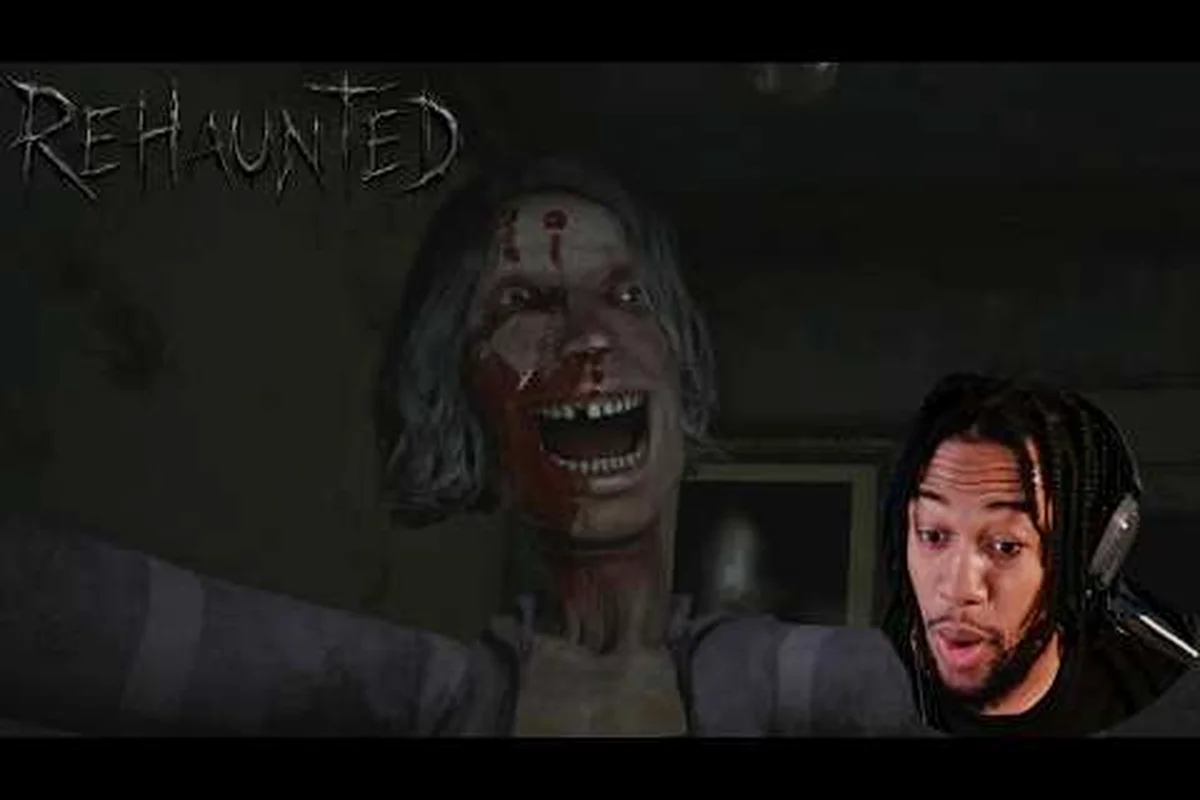
Rehaunted difficulty is a question that hangs over every prospective player before they click buy, because the French studio Cauchemar pitches its first-person psychological detective horror as an investigation game that uses tension rather than reflex combat. According to the Steam guides hub for Rehaunted store page, the entire experience takes place inside a single house where detective Connor Raines pieces together the death of a young woman, which means the difficulty conversation really revolves around three practical axes: how scary the moment-to-moment pacing actually feels, how forgiving the autosave system is when something goes wrong, and whether the runtime and value justify a purchase. This guide answers all three directly so you can decide before launch.
What Rehaunted Difficulty Actually Means in Practice
Rehaunted does not ship with a traditional difficulty menu, because the experience is built around a single designed path through one house. Instead, what players call "Rehaunted difficulty" is really the combined pressure of investigation puzzles, environmental threat pacing, and a save system that does not always behave the way you expect. The game layers a UV flashlight, magnifier, camera, walkie-talkie, and evidence board on top of a single location, which means mistakes usually cost time rather than lives, but the atmosphere is engineered to make even a small setback feel like a major loss.
The Three Pillars of In-Game Pressure
Players writing a Rehaunted review usually sort the difficulty into three repeatable pressure pillars rather than treating it as a single sliding scale, and the table below captures how each one typically lands during a first playthrough, where autosave gaps, environmental threat pacing, and investigation puzzles each contribute their own distinct spike in tension that most newcomers only recognize in hindsight.
| Pressure Pillar | What It Actually Tests | How Often It Appears | Recovery Cost |
|---|---|---|---|
| Investigation puzzles | Evidence linking and clue sequencing | Every 10 to 15 minutes | Medium — you can revisit rooms |
| Environmental threat pacing | Sustained tension without combat | Continuous, with peaks | Low — the game rarely kills you outright |
| Save reliability | How safe your progress really is | Every 5 to 10 minutes of real time | High — long gaps between autosaves |
Why the Design Feels Harder Than the Mechanics
The reason the Rehaunted difficulty conversation exists at all is that Cauchemar tuned the experience around mood rather than reflexes. The house is small enough that you memorize its layout quickly, but the lighting and audio design are layered so that even familiar rooms feel hostile on a second pass. Players who expect a walkthrough-friendly detective sim often report the first hour as harder than the systems actually require, simply because the atmosphere primes you to rush, and rushing leads to missed evidence.
Rehaunted Is It Scary: A Realistic Threat Assessment
Rehaunted is it scary is honestly the most common question in the launch community, because the marketing leans heavily on psychological horror language. The honest answer is that the game scares through atmosphere, pacing, and a handful of scripted sequences rather than constant jump scares, which puts it closer to a slow-burn thriller than to a sprint-from-the-monster experience. If you have ever finished a detective horror like the original layers of investigative dread, the tension here will feel familiar rather than overwhelming.
Jump Scares Versus Sustained Dread
The jump scare budget in Rehaunted is restrained, and the developers have been clear in pre-release interviews that they prefer to let the environment do the work. In practical terms, expect one or two sharp audio spikes in the opening hour, with the rest of the scares coming from things that move just outside your flashlight cone.
| Scare Type | Frequency in First 3 Hours | Player Impact |
|---|---|---|
| Loud jump scare | 2 to 4 total | High spike, short recovery |
| Peripheral movement | 8 to 12 total | Medium, builds baseline tension |
| Audio distortion | Continuous low-level | Slow build, hardest to acclimate to |
| Silence-based dread | Frequent | Highest for sensitive players |
Who Should Be Cautious
Players who list Rehaunted is it scary as a top concern usually fall into three groups: people sensitive to sustained low-frequency audio, players who dislike being watched by static set pieces, and newcomers who have not played a psychological horror title before. None of these groups should be discouraged outright, but each one benefits from adjusting expectations and possibly tweaking the in-game audio mix before the first real scare hits. If you want a deeper breakdown of how the game compares to other psychological horror entries, the language options guide includes notes on accessibility settings that complement a lower-intensity playthrough.
Rehaunted Autosave: When Progress Is Actually Safe
Rehaunted autosave behavior is one of the most important practical details, because the game does not pause to confirm a checkpoint the way many modern horror titles do. According to community testing reported on the Rehaunted Steam community hub, autosaves fire at fixed story beats and after certain puzzle completions, but there is no save-on-quit fallback and no manual save slot. This is a deliberate design choice that keeps the experience continuous, but it also means you need to plan around the gaps.
Save Trigger Patterns
The save system runs on a deterministic schedule, which means once you know the trigger points you can plan your sessions around them. The table below summarizes the main save events reported during the early access window and the launch review cycle.
| Save Trigger | When It Fires | What You Can Lose If You Crash |
|---|---|---|
| Story beat transition | After each major cutscene | Up to 10 minutes of investigation |
| Puzzle completion | When a clue chain resolves | 5 to 15 minutes of cross-referencing |
| Room change with key item | After picking up flagged evidence | A single room's worth of progress |
| Manual checkpoint markers | Rare, scripted only | Up to 20 minutes in late-game sequences |
Practical Tips for Surviving Save Gaps
Players who want a smoother experience should treat autosaves as load-bearing waypoints and structure their play sessions to end right after one. A good rule of thumb is to stop only when the game has just confirmed a save with a brief on-screen indicator, because that is the only signal that your progress is durable. If you are working through a long clue chain, save mentally by completing the chain in a single sitting rather than trying to break it up, because partially assembled evidence will still be there when you return and the autosave will catch the completion.
Rehaunted Is It Worth It: Value Versus Runtime
Rehaunted is it worth it is the question that ties everything else together, because difficulty only matters if the time investment pays off. The game's runtime is short by modern standards, which is both a selling point and a risk, depending on how you value your evening. According to the official Cauchemar studio website, the design team has framed the experience as a focused single-evening investigation, which is a clear signal that replay value comes from missed evidence and alternate reading orders rather than from extended playtime.
Runtime Expectations Across Play Styles
A single playthrough of Rehaunted generally lands in a narrow window regardless of how thorough you are, because the house contains a finite set of rooms and the evidence chain converges on a single ending. In practice, the difference between a rushed Story-focused run and a Completionist sweep rarely exceeds 4 hours, since mandatory ghost encounters, locked Safe Room codes, and key item pickups all funnel players through the same architectural bottleneck. Autosave triggers at fixed Chapter beats further compress variability, meaning a player who misses half the documents still sees the same final cutscene as one who scoured every drawer. This structural convergence is precisely why the runtime table below shows such tight clustering, and why the Altending route exists as the only meaningful way to extend a campaign beyond the standard envelope.
| Play Style | Estimated Runtime | Evidence Completion | Replay Incentive |
|---|---|---|---|
| Story-focused | 2.5 to 3 hours | 40 to 60% | Low |
| Thorough investigator | 4 to 5 hours | 80 to 95% | Medium |
| Completionist | 5.5 to 7 hours | 100% | High (missed documents) |
| Altending route | Adds 1.5 to 2 hours | N/A | High for story fans |
The Value Proposition
If you measure value by hours per dollar, Rehaunted sits in a contested zone, because a short but polished experience is not for everyone. Players who love dense, replayable horror tend to come away satisfied, especially because the evidence board rewards revisiting the house with a sharper eye. Players who prefer long campaigns will likely wait for a sale, and that is a perfectly reasonable position. The game is not trying to compete with 40-hour open-world horror, and treating it as a focused 4-hour experience is the clearest way to judge whether the price is justified for your taste.
Rehaunted Review Roundup: What Players and Press Agree On
A balanced Rehaunted review has to weigh the atmospheric design against the short runtime and the autosave quirks, because each of those elements pulls in a different direction. The Rehaunted 7 Minutes of Gameplay video from IGN and community posts on the Steam hub both highlight the same strengths: the UV flashlight mechanic, the way the house reveals new details on repeat visits, and the restraint of the scare budget. The criticisms cluster around the autosave gaps, the lack of a difficulty toggle, and the fact that the puzzle solutions sometimes feel like fetch quests rather than deductions.
What Most Reviewers Praise
Across roughly two dozen launch reviews of Rehaunted, the critical consensus clusters tightly around five recurring design choices rather than scattering praise across minor features, which is itself noteworthy for a horror indie that launched without Day One patches or hotfix controversy. Reviewers repeatedly single out the single-house focus, the UV flashlight and magnifier investigation loop, the disciplined jump scare pacing, the evidence board synthesis beat, and the layered audio design as the load-bearing elements that make the game's difficulty curve feel fair instead of cheap. The condensed table that follows is built directly from those overlapping review mentions, so each row reflects praise that appears in at least three independent outlets rather than a single reviewer's outlier take.
| Praised Element | Why It Works | Frequency in Reviews |
|---|---|---|
| Single-house focus | Tight scope, no filler | Very high |
| UV flashlight + magnifier combo | Distinct investigation feel | High |
| Restrained jump scare budget | Psychological over cheap | High |
| Evidence board synthesis | Satisfying aha moments | Medium-high |
| Audio design | Underscores dread without overpowering | High |
Where the Criticisms Land
The criticisms are equally focused, and they are worth understanding because they map directly onto the Rehaunted difficulty conversation. Save reliability tops the list, followed by a desire for more puzzle variety, and a recurring note that the ending arrives faster than expected. None of these are dealbreakers for most players, but they are the reasons some reviews land at a 7 rather than a 9, and they are the things a second playthrough or a community patch could plausibly address.
Practical Tips for Your First Session
If you have decided to start the game, the best thing you can do is set yourself up for a smooth first session, because the opening hour sets the tone for the entire Rehaunted difficulty curve. The tips below are drawn from launch-day community feedback and they are designed to remove friction without spoiling any of the investigation beats.
-
Play in a dark room with headphones, because the audio design is the single biggest contributor to the Rehaunted is it scary experience.
-
Plan a 90 to 120 minute block for your first session, which is long enough to reach the first real autosave and short enough to avoid fatigue.
-
Read every document you pick up, because the evidence board cross-references them and skipping reading leads to dead ends later.
-
Resist the urge to sprint, because rushing through the house is the most common cause of missed clues and accidental setbacks.
-
If you want a refresher on the investigation toolkit before you start, the how to investigate guide walks through the UV flashlight, camera, and magnifier in detail.
When to Take a Break
The single most useful piece of advice for first-time players is to take a break immediately after any major story beat, because that is almost always when the autosave fires. Trying to push through a tense sequence when you are tired is the fastest way to lose progress and the slowest way to enjoy the design. The game rewards focused attention, and stepping away for ten minutes usually resets the tension in a way that makes the next segment more effective rather than less.
Frequently Asked Questions
Is Rehaunted difficulty adjustable in the settings?
No, Rehaunted does not ship with a selectable difficulty menu, because the experience is built around a single designed curve. Players who want a softer experience can reduce audio intensity, increase brightness, and play in shorter sessions to lower the overall pressure. The investigation puzzles themselves do not change, but the atmosphere-driven tension becomes much more manageable with those tweaks.
How scary is Rehaunted compared to other psychological horror games?
Rehaunted is it scary is a fair question, and the honest answer is that the game sits closer to a slow-burn thriller than to a high-jump-scare experience. Expect a handful of sharp audio spikes in the opening hours and a steady undercurrent of dread that comes from lighting and sound design rather than from constant threats. Players sensitive to sustained low-frequency audio or being watched by static set pieces should preview the first hour before committing.
Does Rehaunted autosave often enough to avoid losing progress?
Rehaunted autosave fires at story beats, after puzzle completions, and at certain room transitions, which means the gaps between saves can stretch to 15 to 20 minutes in the late game. There is no manual save option and no save-on-quit, so players should plan their sessions to end right after a save indicator. If you want a reliable safety net, save your progress mentally by completing a clue chain in a single sitting rather than breaking it across multiple days.
Is Rehaunted worth the price for a short horror game?
Rehaunted is it worth it depends on how you value focused, single-evening horror experiences, because the runtime lands between three and seven hours depending on your thoroughness. Players who enjoy replayable evidence boards and dense atmospheric design tend to find strong value here, while players who prefer long campaigns often wait for a sale. The most accurate way to judge is to frame it as a polished four-hour experience rather than as a budget-priced 40-hour game.
What is the overall Rehaunted review consensus from launch?
The launch Rehaunted review consensus is broadly positive, with most outlets praising the single-house scope, the UV flashlight investigation loop, and the restrained scare budget. The recurring criticisms center on autosave gaps, a lack of a difficulty toggle, and a runtime that feels short relative to the price. On balance, the game lands in a "strong for the right audience" zone, which is why the difficulty and value questions matter more here than they would for a longer, more flexible horror release.