
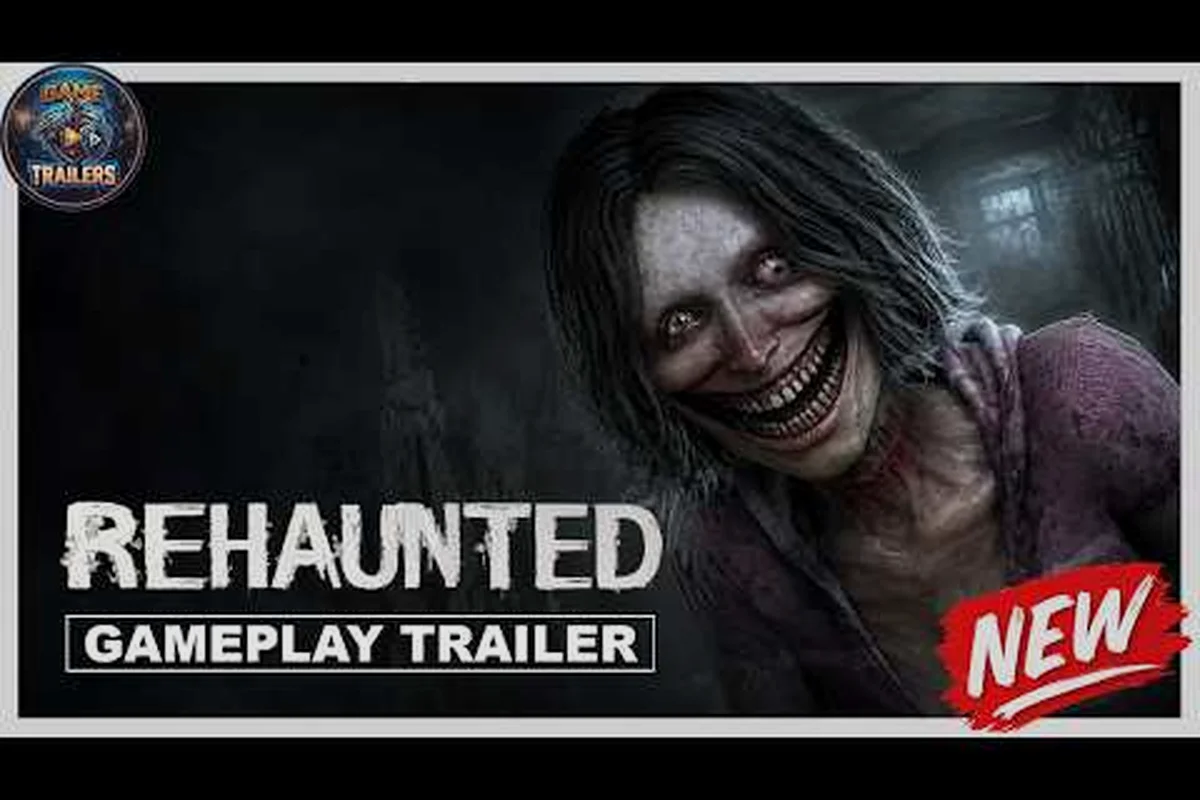
Every scattered paper in Rehaunted hides a piece of the Rehaunted documents story, and learning how the notes fit together is the fastest way to make sense of the house you are trapped in. The game hands you a UV flashlight, a camera, a magnifier, and an evidence board, then asks you to read the Rehaunted family secret off the walls, the floors, and the backs of photographs. Because the developer at Cauchemar intentionally leaves the file incomplete, the Rehaunted ghost story below is reconstructed from in-game documents, the IGN's Rehaunted reveal trailer store description, and player reports.
The Rehaunted Documents Story at a Glance
Connor Raines walks into a single house to investigate the death of a young woman and leaves with a stack of contradictory case files. The Rehaunted documents story is told entirely through what you can pick up, photograph, or zoom in on, so the order in which you collect notes reshapes the order in which the truth lands.
Why the Paper Trail Matters
The Rehaunted case file is not decoration. Each page carries one of three functions, and learning to read them by function makes the Rehaunted family secret easier to decode. Most first-time players treat the paperwork as flavor text and only re-read it after the what-happened-in-the-house summary lands. The better habit is to photograph every readable page on sight, because some pages vanish after a scripted event.
| Document Type | What It Carries | Where It Usually Hides | Story Role |
|---|---|---|---|
| Family Letters | Personal history, dates, names | Bedroom desks, hallway drawers | Builds the Rehaunted family secret |
| Police / Medical Reports | Time of death, injuries, cause | Filing cabinets, basement shelves | Confirms or contradicts the Rehaunted ghost story |
| Diary Fragments | First-person emotional account | Under mattresses, behind mirrors | Reveals Rehaunted house secrets in the victim's own words |
| Photographs | Faces, rooms, hidden symbols | Photo albums, walls, glove boxes | Anchors each suspect to a place |
| Newspaper Clippings | Public records, missing persons | Living room, attic trunks | Provides outside corroboration of the Rehaunted documents story |
How the House Forces You to Read
Cauchemar designs the Rehaunted case file as a closed loop: the documents point at locations, and the locations point back at documents. The UV flashlight exposes writing that reads blank in normal light, the magnifier reveals tiny annotations on photographs, and the camera lets you pin snapshots to the evidence board. Once a document is on the board, lines of red string appear automatically when two items reference the same person, object, or date.
This is also why the question Rehaunted why is the house haunted cannot be answered from a single page. The house is haunted because the documents say it is haunted, the documents say it is haunted because something happened in the house, and something happened in the house because the documents describe it. The loop is the point: you are meant to feel trapped in the same pattern Connor does.
Reading the Family Secret Lineage
The strongest thread in the Rehaunted documents story is the family tree written across three generations of letters. Without spoiling the ending, the Rehaunted family secret is never stated in one document. It is split across birth certificates, a burned journal, and a final letter that the game only unlocks after you complete the evidence board. Connor writes down the same handful of names on almost every page, so keeping a glossary in your head speeds up every later document.
Core Family Names You Will See
| Name | Role in the File | Key Document |
|---|---|---|
| The House Owner | Original builder and head of family | Property deed in the study |
| The Matriarch | Keeper of the Rehaunted family secret | Burned journal, partially legible |
| The Young Woman | Victim of the in-house death | Police report, autopsy sheet |
| Connor Raines | Detective investigating the case | His own notebook entries |
| The Neighbor | Eyewitness mentioned in clippings | Newspaper interview, page 3 |
What the Letters Reveal in Order
When you read the documents in roughly the order the house presents them, three layers of the Rehaunted family secret peel back. The earliest letters describe a normal family, the middle letters describe a slow breakdown of trust, and the final letters describe an attempt to contain something that should not have been contained. The Rehaunted case solved ending only makes sense if all three layers have been read, because the final document is a response to the first one.
Players who collect documents out of order often report a different reading of the Rehaunted ghost story. Community reports note that reading the burned journal before the property deed changes the emotional weight of the deed significantly, and reading the autopsy before the diary changes whether the diary reads as grief or confession.
The Ghost Story Hiding in the Margins
The Rehaunted ghost story is told in the margins of otherwise normal paperwork. Annotations, underlines, and coffee-stained fingerprints are not random. They form a separate voice that responds to the typed text, and once you spot one annotation you start seeing them everywhere.
Common Annotation Patterns
| Pattern | What It Looks Like | What It Means in the Rehaunted ghost story |
|---|---|---|
| Single underline | Straight line under a name or date | The reader flagged that word as important |
| Double underline | Two parallel lines | The reader disagreed with what was written |
| Marginal question mark | "?" next to a claim | Reader suspects a lie in the typed text |
| Crossed-out name | Name scribbled over | Reader is hiding someone from later readers |
| Inserted date | New date written above an old one | Reader is re-dating an event to fit a new theory |
The Rehaunted demon story thread is buried in these annotations more than in any single document. A demon, in this file, is rarely named outright. Instead, an early letter mentions an unwelcome guest, a later letter mentions a long-term boarder, and only the annotations admit that the writer believes they are housing something inhuman. The same unnamed entity is also the reason the house is haunted, which is why the question Rehaunted why is the house haunted keeps coming back to the same paragraph.
How the Annotations Branch the Story
Two players can collect the same set of documents and walk away with different Rehaunted case solved conclusions, because the annotations prioritize different suspects. One branch of annotations pushes the supernatural reading: it underlines every reference to the boarder, circles every date the boarder was home, and writes a question mark next to every neighbor's alibi. Another branch pushes the mundane reading: it underlines financial entries, circles debts, and writes a question mark next to the autopsy's cause of death.
Cauchemar has not officially confirmed which branch is "correct," and the Rehaunted case file deliberately supports both. The Rehaunted demon story is therefore best read as a question the documents are asking you, not a question the documents are answering for you.
Reconstructing the Night of the Death
The night of the death is the densest cluster of paperwork in the entire Rehaunted documents story, and it is the cluster most players miss on a first run. The cluster sits in three locations: the kitchen drawer, the upstairs hallway shelf, and the basement trunk. Each location carries a different perspective on the same four-hour window.
Document Cluster by Location
| Location | Documents Found | Perspective on the Night |
|---|---|---|
| Kitchen drawer | Note pad, grocery list, unanswered letter | The victim's evening routine |
| Hallway shelf | Calendar, appointment card, two letters | The victim's external obligations |
| Basement trunk | Torn photo, insurance form, final will | The victim's long-term plans |
| Police report (any room) | Incident sheet, witness list, time log | The official record of the same night |
Reading the kitchen documents first gives you a warm, domestic view of the Rehaunted ghost story. Reading the hallway documents second pushes the death toward a missed appointment. Reading the basement documents third turns the death into a deliberate act. The police report ties all three together but only names a cause, not a motive.
Where the Documents Disagree
The strongest evidence that the Rehaunted documents story is designed to be unsolved at face value is that the documents disagree with each other on the same facts. The diary says the house was empty that night. The neighbor's statement says the house was full. The police report says only one car was in the driveway. A photograph in the basement shows two cars.
| Fact | Diary | Neighbor | Police | Photograph |
|---|---|---|---|---|
| People in the house | None | Several | One car, so one person | Two cars |
| Time of disturbance | After midnight | Around 9 p.m. | 11:47 p.m. | Date stamp on photo: 10:15 p.m. |
| Cause suggested | None stated | Argument overheard | Unspecified trauma | None visible in image |
When you place these on the evidence board, the red-string connections do not collapse into a single timeline. The Rehaunted case solved ending then becomes a matter of which contradiction you choose to trust, which is also why so many community guides describe different "true" culprits. A useful side reference is the true-culprit breakdown, which maps each contradiction to a named suspect and lets you cross-check your own reading.
Rehaunted House Secrets Hidden in Plain Sight
The Rehaunted house secrets that players talk about most are not in the documents at all. They are in the way the documents are placed in the house, the way the rooms change after you read them, and the way the camera behaves when you try to photograph certain walls.
Document Placement as Story
| Placement Pattern | What the House Is Telling You |
|---|---|
| Document on a fresh corpse | The victim was holding this page when she died |
| Document in a locked drawer | Someone hid this page on purpose |
| Document behind wallpaper | The page was removed from the public record |
| Document on a child's bed | A different family member is involved |
| Document in the same spot twice | A time loop or reset has occurred |
These placements are why the Rehaunted documents story feels spatial rather than linear. Reading the same document in two different rooms can change the meaning, because the room itself becomes a second annotation. The game does not flag this for you, but the all-documents checklist does call out the documents that exist in multiple placements.
House Reactions You Should Photograph
Three specific house reactions are confirmed by player reports and align with the Rehaunted demon story subtext. After reading the burned journal, the lights in the upstairs hallway flicker every time you pass them. After reading the autopsy, the basement door is unlocked even if you locked it. After reading the final letter, the photograph on the evidence board changes its face for one frame. None of these reactions unlock new documents, but all of them are the house's way of saying the documents have been understood.
Frequently Asked Questions
How many documents are in the Rehaunted documents story in total?
There are 31 unique documents across the house, plus 4 duplicate placements that count toward completion. Photographing all 31 plus the 4 duplicates unlocks the Archivist evidence bonus on the board, which is the only way to see the final page that explains the Rehaunted family secret in full.
Can the Rehaunted case be solved without reading every document?
Yes, but only one of the three available endings is reachable that way. The other two endings require the annotation patterns from the marginal notes to resolve, and those patterns only appear once you have read at least 24 of the 31 documents. A focused walkthrough is laid out in the final-chapter guide.
Is the Rehaunted demon story a literal demon or a metaphor?
The documents never say "demon" outright. They use unwelcome guest, boarder, and the thing in the basement. Community reports are split, and Cauchemar has left the question open in the official Steam description. Treat the demon reading as one of two valid lenses rather than the confirmed answer.
What is the single most important document to read first?
The property deed in the study. It names the house owner, the construction date, and the original purpose of the basement, and every later document refers back to at least one of those three facts. The deed is also the page that most clearly answers Rehaunted why is the house haunted on its own.
Does the villain ever reference the documents out loud?
The villain references the documents by paraphrasing them, not by quoting. A line-by-line comparison of their dialogue against the burned journal is laid out in the villain profile, and it is the cleanest way to confirm which ending you are walking into during the final confrontation.